CityU young scholar’s research on rare cells brings hope to new cancer immunotherapy and vaccine
Cancer immunotherapy has drawn increasing attention in recent years. Although still at its infancy, it has brought hope to many cancer patients. Exploring the anti-tumour activities of a rare immune cell type in the human body is the focus of a research project led by a biomedical scientist and her research team at City University of Hong Kong (CityU). The research findings will provide insights into designing new generations of cancer immunotherapy and vaccine against different cancers.
Dr Chow Kwan Ting, an Assistant Professor in the Department of Biomedical Sciences (BMS), has received the 2019 Croucher Innovation Award for the above-mentioned research. She is the only female awardee this year. Together with another scholar from the Department of Chemistry, this is the first time CityU scholars have received this prestigious award.
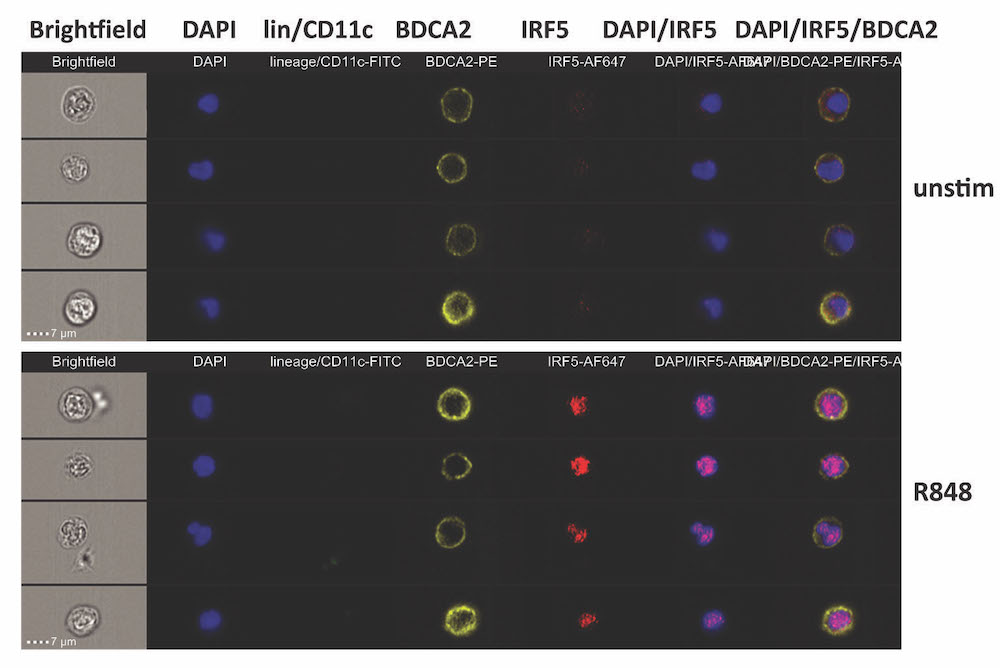
Dr Chow felt extremely honored to receive this award. “I was awarded the Croucher Foundation Postdoctoral Fellowship in 2014-2015, during which the basis of my current research on the immune system was built. I am grateful to the Foundation’s trust and support throughout these years,” she said. She also thanked CityU and BMS Department for their strong support, especially in terms of resources. “Our team has recently purchased a piece of equipment that can capture high resolution single-cell images that are crucial to our research. It is the only instrument of its kind in Hong Kong.”

Unleashing the intrinsic power of immune system to fight cancer
Dr Chow’s research focuses on the mechanism of the human body’s immune response to cancer. “The human immune system is a very powerful and amazing defense system that fights against different viruses and bacteria all the time,” she said. She pointed out that scientists understand how the immune system responds to different types of infection quite well. For example, the way it fights bacteria is quite different from the way it fights viruses. However, relatively little is known about its response to cancer.
She further pointed out that cancer usually arises from an accumulation of mutations in cells. “Actually cell mutations occur all the time in the human body. The immune system is usually apt at keeping these mutations in check. It is when these immune defense mechanisms break down that we succumb to cancer,” she explained.
Therefore, Dr Chow is dedicated to understanding how the immune system naturally fights cancer, why and when this defence breaks down during disease progression, and how to stimulate the body’s own defence system to mount an effective anti-cancer response. “Traditional cancer treatments such as chemotherapy and radiotherapy have toxic side effects. Even targeted therapy does not spare all healthy cells. However, immunotherapy can direct the immune system to kill only cancer cells without harming healthy cells.”
Dr Chow stressed that the immune system has a unique capability of remembering an intruder for a long time after the initial encounter. If the same intruder appears again, the immune system can mount a much faster and more robust response. “So immunotherapy has the potential to offer lifelong protection for a patient,” she added. Yet she also pointed out that cancer cells constantly mutate to escape the immune system. So the immune system needs to continuously “learn” or “renew” to keep up with this arms race.
Explore a specific immune cell type’s cancer immunity
Dr Chow has set up a laboratory at CityU to study the immune system’s natural ability to tackle cancer. The research team combines concepts and techniques from molecular and cell biology, cancer biology, immunology, genomics, cell and animal models, and systems biology to dissect the molecular pathways and gene regulatory networks that modulate the anti-cancer immune response. Another focus of the team is the cell-cell interactions that modulate anti-cancer immunity.
A specific immune cell type – pDCs (plasmacytoid dendritic cells) is the focus of Dr Chow’s Croucher Innovation Award research project. She explained that pDCs are known to be important for fighting virus infection, but generally not implicated in other types of infection. Her team found that apart from the virus fighting pathways, other immune pathways are also present in pDCs. When investigating the gene network regulated by various immune pathways, they found that different stimuli induced changes in different gene sets, resulting in different behaviors of the cell. These observations suggest that pDCs are capable of more than just combating virus infection: their role in cancer immunity is beginning to emerge.
Dr Chow added that recent studies have shown that pDCs are found within tumours, and recruitment of pDCs into the tumour appears to increase survival in animal models of certain types of cancer. On this basis, Dr Chow is currently investigating how pDCs are programmed to detect and combat cancer.
Focus on liver and breast cancers
Speaking of hurdles in this research, Dr Chow pointed out the isolation of pDCs is technically very challenging as these are a very rare cell type, making up only less than 1% of the cells in human blood. Another challenge is the vastly different immune responses against different cancers. Currently, their focus is on liver and breast cancers, which are prevalent in Hong Kong.
For the next stage of the research, they will collaborate with local hospitals to obtain patient samples for validating the laboratory findings. They will explore different ways to stimulate the immune system as cancer therapeutics.

Apart from designing targeted immunotherapies, her team will also work on vaccines against cancer. “Traditional vaccines elicit the memory of the immune system by injecting dead or weakened bacteria or viruses. Can we apply the same strategy to fight against cancer? For example, can we use dead or weakened cancer cells as a way to educate the immune system? This is also one of our research directions,” said Dr Chow.
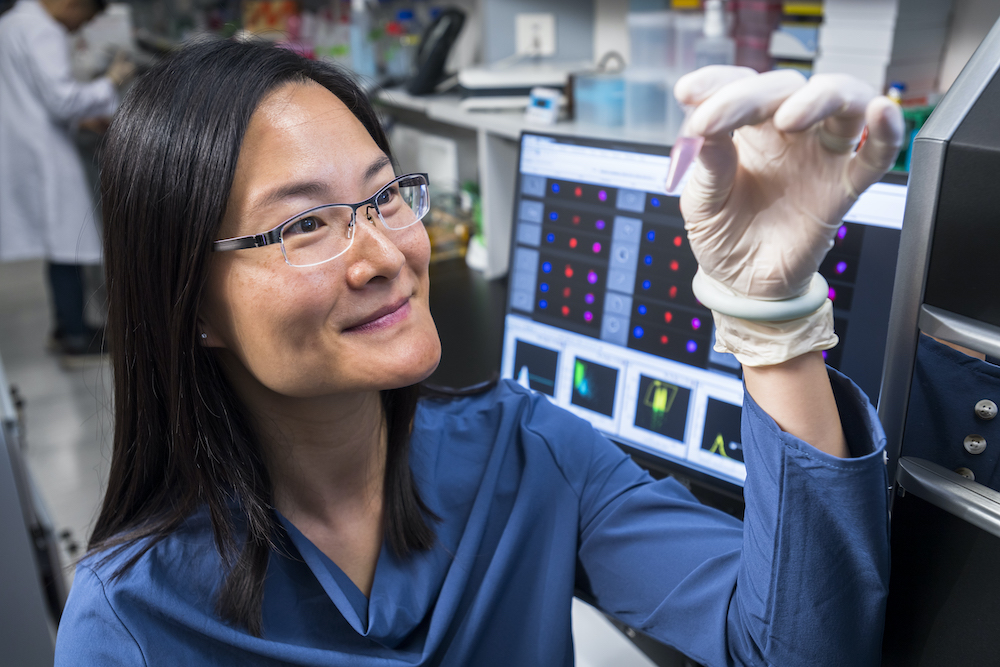
Dr Chow started her research on pDCs as a postdoctoral fellow while conducting immunology research at the University of Washington. Before that, she obtained her PhD in molecular and cell biology at the University of California, Berkeley. She moved back to Hong Kong in 2018 and joined CityU to continue her research.
As an outstanding researcher, Dr Chow has received many awards in her career, including the Honorable Mention of National Science Foundation Graduate Research Fellowship Programme in 2008-2009, the Graduate Student Research Conference Award by the National Institutes of Health (NIH) in 2012 and the 2015-2018 Ruth L Kirschstein NIH National Research Service Award Postdoctoral Fellowship (F32) presented by the NIH.
The highly selective Croucher Innovation Award is awarded to a small number of exceptionally talented and internationally competitive scientists. It offers substantial support to these “rising stars” at a formative stage in their careers. It is designed to enable recipients to advance their expertise, engage in bold innovation, and contribute to the development of education and research in Hong Kong. Winners are offered up to HK$ 5 million as research funding in five years. Another recipient of this award is Dr Kwok Chun Kit, an Assistant Professor in the Department of Chemistry at CityU.
Related story: CityU scholar researching on RNA awarded Croucher Innovation Awards