Top chemist’s pioneering concept in nanomaterials
Professor Zhang Hua, Herman Hu Chair Professor of Nanomaterials in the Department of Chemistry at City University of Hong Kong (CityU), has been elected Foreign Fellow of the European Academy of Sciences recently. As a specialist in the field of nanomaterials, he regarded this honour as international recognition of his team’s interdisciplinary research on the phase engineering of nanomaterials (PEN) and encouraged them to pursue the related research continuously.
Founded in 2003 and based in Brussels, the European Academy of Sciences (EurASc) promotes excellence in science and technology. Currently, the Academy has some 600 members in its nine divisions, including 65 Nobel Prize and Fields Medal (known as the “Nobel Prize for Mathematics”) winners, from 45 nations. This is not the first time CityU scholars being proudly elected as EurASc Fellows. In 2019, Professor Alex Jen Kwan-yue, Provost and Chair Professor of Chemistry and Materials Science, Professor Felipe Cucker, Head of the Department of Mathematics (MA) and Chair Professor, and Professor Yang Tong, Chair Professor in MA, have also been elected as Fellows.

Specialist in nanomaterials
Professor Zhang Hua, the newly elected Foreign Fellow of the European Academy of Sciences, is a specialist in the field of nanomaterials with excellent research achievements:
- Fellow of the Royal Society of Chemistry (2014)
- Academician of the Asia Pacific Academy of Materials (2015)
- “Highly Cited Researchers" in Materials Science (2014), and Chemistry and Materials Science for the following 5 consecutive years (2015-2019) according to Clarivate Analytics
- One of the 17 and 19 “Hottest Researchers of Today” in the World’s Most Influential Scientific Minds in 2014 and 2015 respectively by Thomson Reuters (now known as Clarivate Analytics)
- Top 300 most cited researchers in the field of materials science and engineering by Elsevier Scopus in 2016
- Published about 500 papers with citations of over 73,900 and an H-index of 133 at Web of Science, and citations of over 86,800 and H-index of 141 at Google Scholar
- One of the Chairmen of the Editorial Board of ChemNanoMat (2015-); also on the Editorial Advisory Board / Editorial Board / Advisory Board of over 20 academic journals including ACS Nano (2014-), Advanced Functional Materials (2018-), Advanced Materials (2019-), Carbon (2013-), Chem (2016-), Matter (2019-), Nanoscale Horizons (2015-), NPG Asia Materials (2018-) and Small (2012-)
- Filed over 70 patent applications (including 8 granted US patents)
Professor Zhang described that being elected Foreign Fellow of the European Academy of Sciences is a great honour for him. “It means that our interdisciplinary research on the phase engineering of nanomaterials has been recognised internationally and that it encourages me to continuously pursue great research,” said Professor Zhang, who collaborates frequently with scientists in China, Europe, UK, and the US.
Phase Engineering of Nanomaterials
Together with his team, Professor Zhang published a review article titled “Phase Engineering of Nanomaterials” in Nature Reviews Chemistry recently, providing an overview of the recent progress in the new concept of phase engineering of nanomaterials.
Professor Zhang explained that “Phase Engineering of Nanomaterials (PEN)” is the rational design, preparation, and transformation of different phases in nanomaterials. The structure of materials determines the properties and ultimately affects the application. In the past several decades, many advances have been made in the structure engineering of nanomaterials to achieve unique mechanical, electronic, optical, magnetic, and catalytic properties. Conventional engineering strategies usually use the composition, morphology, facet, size, and dimensionality of nanomaterials as structural parameters. However, in recent years, phase has emerged as an important structural parameter that determines the properties and functionalities of nanomaterials. It provides another effective way to modulate the physicochemical properties and functions of nanomaterials.

In view of this, Professor Zhang’s team has proposed the concept of “Phase Engineering of Nanomaterials” (PEN). In the review article, they discussed systematically and highlighted recent PEN advances. They also discussed various strategies used to synthesize nanomaterials with unconventional phases and induce phase transformation of nanomaterials, by taking noble metal and transition metal dichalcogenide (TMD) nanomaterials as typical examples. Subsequently, they also introduced methods to prepare amorphous and amorphous–crystalline heterophase nanomaterials.
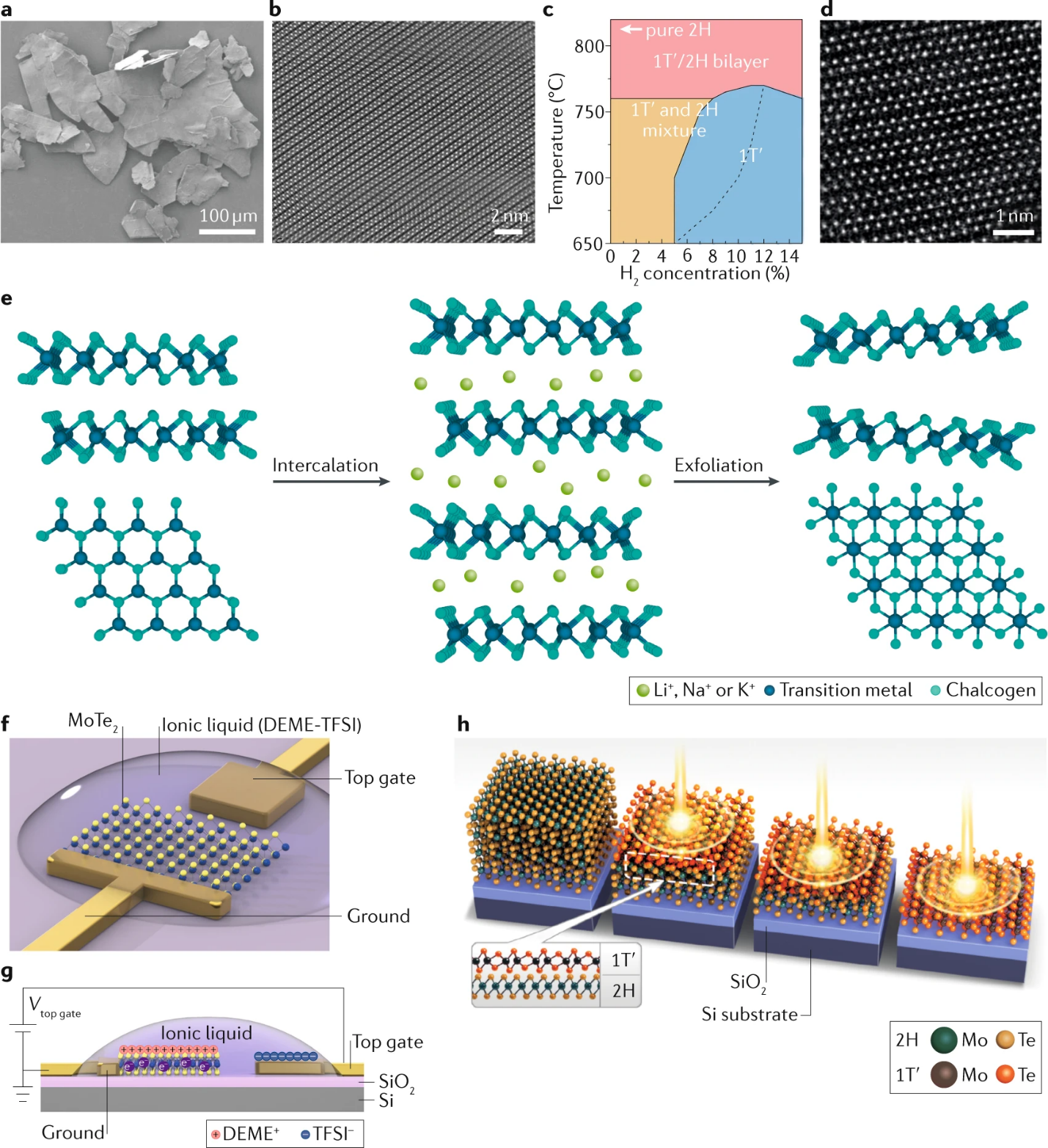
The team pointed out in the article that it is still challenging to control the phase and morphology of nanomaterials simultaneously. Moreover, Professor Zhang suggested that stability is another critical problem to be solved in PEN. Although materials with unconventional phases possess unique physicochemical properties, researchers need to find ways to stabilize the prepared unconventional phases for further applications.
Professor Zhang shared that there are many intriguing directions to be explored in PEN. For example, strategies involving electrochemistry, electric field, magnetic field, and optical radiation could also be explored to induce the phase transformation of nanomaterials.
One particular area of Professor Zhang’s research is the synthesis and simultaneous control of phase and morphology of ultra-thin two-dimensional nanomaterials, such as metal nanosheets, graphene, metal dichalcogenides, metal-organic frameworks, and covalent organic frameworks. Although these nanomaterials may sound unfamiliar to the public, yet they have many promising applications in daily life. “Our research contributes to catalysis, clean energy, (opto-) electronic devices, nano- and biosensors, and water remediation, which can all help people to improve their lives,” he said.
Professor Zhang concluded that the concept of PEN can also be applied to many other materials with unique physicochemical properties and promising applications, such as perovskites. He looked forward to providing new ideas and new research strategies for the discovery of novel functional materials.