Pioneering ‘synapses’ promise record-low energy use for future AI
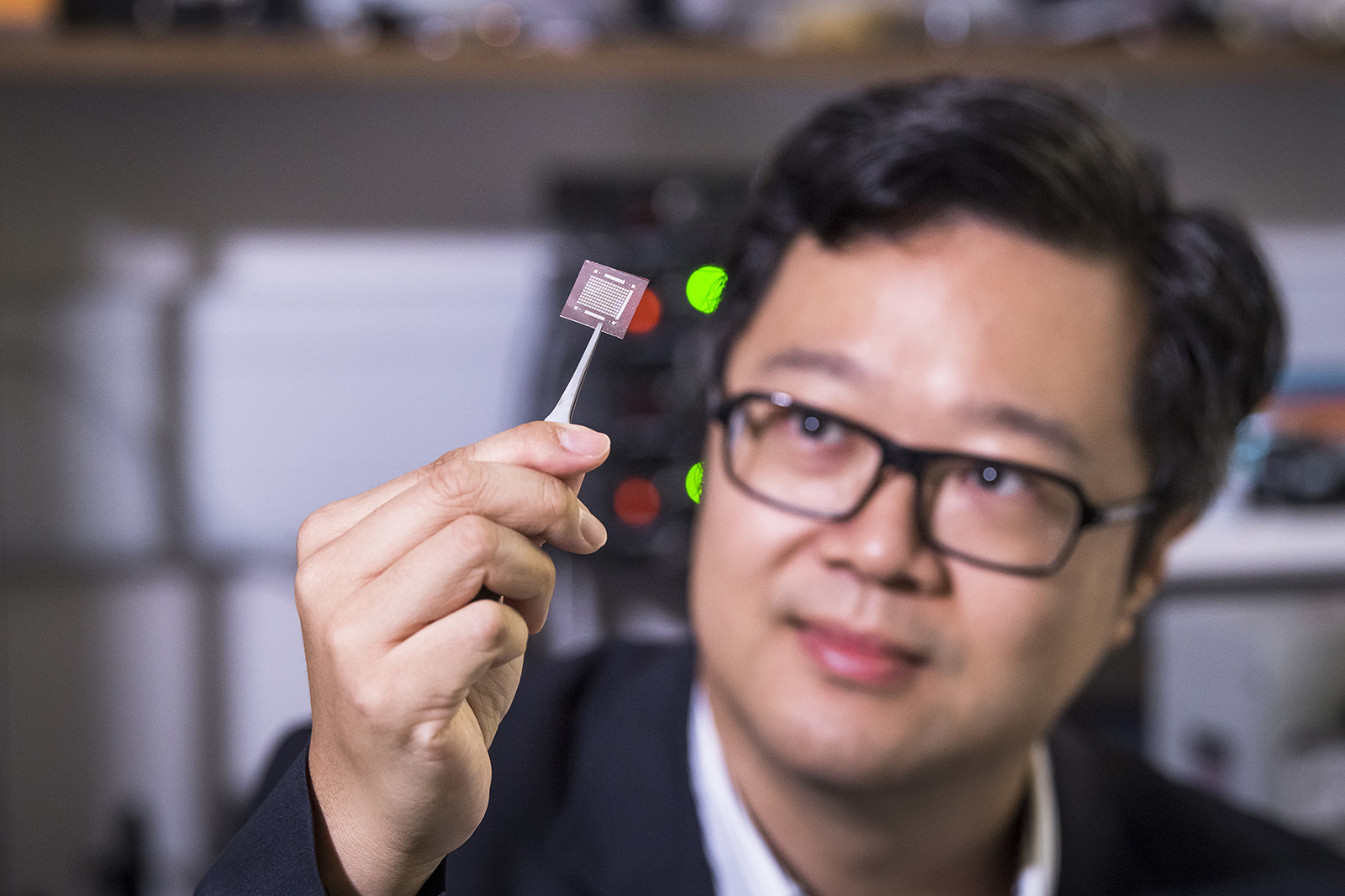
The energy consumption of a new artificial visual system developed through joint research led by City University of Hong Kong (CityU) can be reduced by over 90% per synaptic event when compared to synapses in the human brain.
The new system’s low energy usage will be a boon to the next generation of artificial intelligence (AI), helping to perform data-intensive cognitive tasks as effectively as the human brain.
The findings of the research team led by Professor Johnny Ho Chung-yin, Associate Head in the Department of Materials Science and Engineering (MSE) at CityU, have been published in Science Advances titled “Artificial visual system enabled by quasi-two-dimensional electron gases in oxide superlattice nanowires”.
Scientists have been trying to develop AI computers that can be as light, energy-efficient and adaptable as the human brain. Communication between neurons occurs at tiny gaps called synapses in the human brain. An artificial synapse mimics the brain's efficient neural signal transmission and memory formation process.
“Unfortunately, effectively emulating the brain’s function of neural network connections in existing artificial synapses through an ultralow-power manner is still challenging,” said Professor Ho.
To enhance the energy efficiency of artificial synapses, Professor Ho’s research team has introduced quasi-two-dimensional electron gases (quasi-2DEGs) into artificial neuromorphic systems for the first time.
The team has designed quasi-2DEG photonic synaptic devices using their newly developed oxide superlattice nanowires, a kind of semiconductor that allows the electrons to move freely in the superlattice interface.
These devices can achieve record-low energy consumption, down to sub-femtojoule (0.7fJ) per synaptic event. This translates as a decrease of 93% in energy consumption when compared with synapses in the human brain.
Upon exposure to light pulse, a series of reactions between the oxygen molecules in the environment and free electrons inside the oxide superlattice nanowires was induced, changing the conductance of the photonic synapses and resembling that seen in the biological synapse. Hence the quasi-2DEG photonic synapses can mimic how the neurons in the human brain transmit and memorise signals.
“The special properties of the superlattice nanowire materials enable our synapses to have both photo-detecting and memory functions simultaneously. Our device can save energy as there is no need to construct additional memory modules for charge storage in an image sensing chip,” explained Professor Ho.
This artificial visual system could accurately and efficiently detect a patterned light stimulus and “memorise” the shape of the stimuli for as long as an hour. “It is just like how our brain remembers what we see for some time,” said Professor Ho.
He added: “Our experiments have demonstrated that the artificial visual system with our photonic synapses could simultaneously perform light detection, brain-like processing and memory functions in an ultralow-power manner. We believe our findings can provide a promising strategy to develop bionic devices, electronic eyes, and multifunctional robotics in the future.”
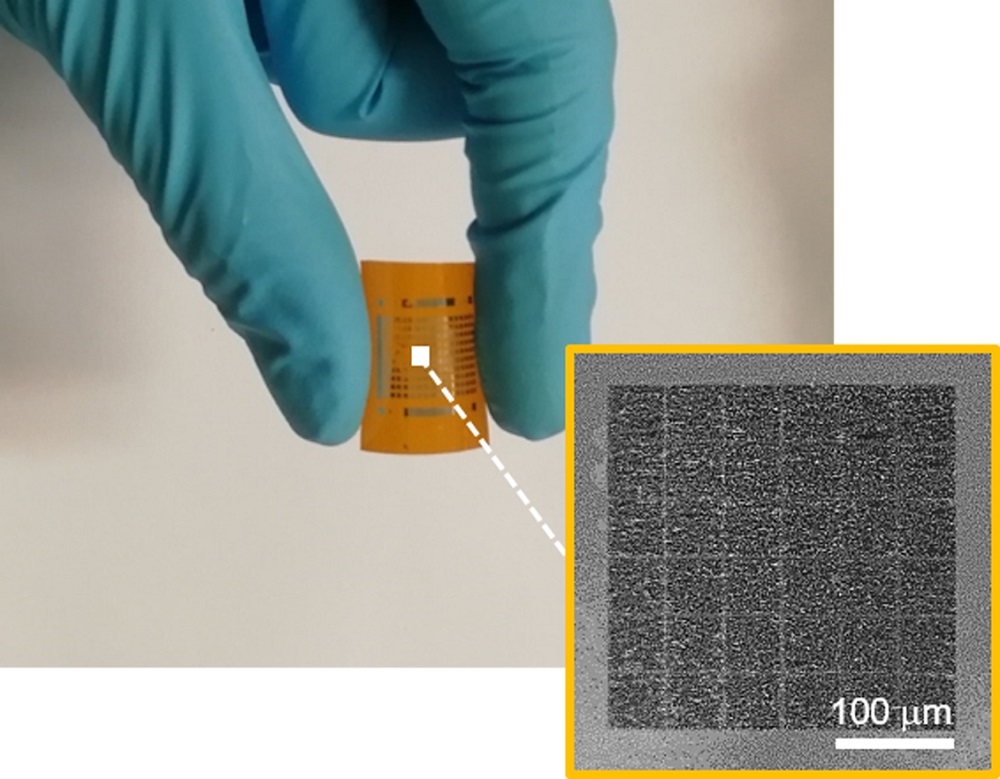
The synthesis of the photonic synapses and the artificial visual system does not require complex equipment, either. The devices can be made using flexible plastics in a scalable and low-cost manner.
Professor Ho is the corresponding author of the paper. The co-first authors are Meng You and Li Fangzhou, PhD students from MSE. Other team members include Dr Bu Xiuming, Dr Yip Sen-po, Kang Xiaolin, Wei Renjie, Li Dapan and Wang Fei, all from CityU. Other collaborating researchers come from the University of Electronic Science and Technology of China, Kyushu University, and the University of Tokyo.
The study received funding support from CityU, the Research Grants Council of Hong Kong SAR, the National Natural Science Foundation of China, and the Science, Technology and Innovation Commission of Shenzhen Municipality.