Director Jeremy Kagan throws students in at the deep end
Shiona Mackenzie
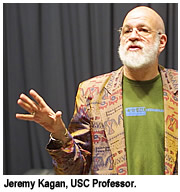
“I was at bit of a loss because we had to prepare two five-minute scenes in advance of the course, selecting them from any source,”

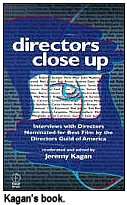
Perhaps best known for his numerous hit TV series, including Ally McBeal (1997), West Wing (2001), and Boomtown (2002), Kagan has also written, directed and produced feature films such as The Chosen (1980; Grand Prix winner at the Montreal World Film Festival and Christopher Award in 1982) and
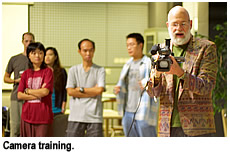
Theory swiftly put into practice
The Directing Intensive course was initially to have the students make two five-minute scenes from stories the students wanted to tell. But as the workshop began, Professor Kagan realized how new the directing concepts were to his pupils and revised the course to accommodate the realities of the students. Each scene needed to have two characters and the students were to rehearse with their actors, spend the following day shooting the scene, and edit the scene on the next day. Fortunately, the SCM is equipped with a top-of-the-line digital editing facility and other necessary resources.
| “I threw them into deep water…” |
Kagan’s method? The first class was a 150-minute lecture on the concepts and tools for motivating performance. “I asked them to do a lot of hard work, considering it was their first experience of writing, directing and editing a scene.” Marco agrees, “He supplied us with a 30-page handout to refer to throughout the following sessions. We listened to his lecture on the basic skills, and then we immediately used what we had learned.”
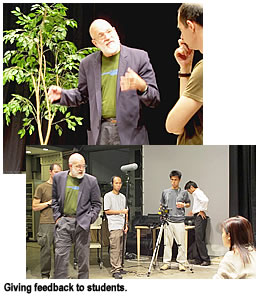
The second session was a practicum where Kagan applied the theory of the first lesson by working with two actors. “I needed a male and a female, between 25 and 30 years old, who could speak English well. I was pleased this could happen, as it gave the students a practical example of the theories we had talked about. As the course progressed, I was impressed by the film students’ enthusiasm and willingness to take chances.”
The students were divided into groups of about five members each -- one 'director' with his 'crew', so that the groups were at different stages of their work every day. "At first I was nervous, but after that first day, I realized that the Professor was not only a famous expert, but also a nice teacher. Instead of simply finding fault, he asked us questions that gently pointed us towards noticing our own mistakes and helped us discover the solutions for ourselves. It's a problem-solving technique that I can apply anytime, anywhere," Marco said. “They had many big challenges along the way,” Kagan noted, “but I felt that they were up to it.” After about a week, they were ready to view each other's edited first scenes.
"I really appreciated Professor Kagan's insightful personal anecdotes," Marco added. "It can be difficult to explain to actors the behaviour, or the emotional expressions you want to see based on the script. Professor Kagan taught me how to communicate well with the entire crew and the cast... The course proved to be extremely worthwhile. I'd like the SCM continue to offer this summer course."
“I threw the students into deep water," Kagan concluded, "and they swam very well.”
Born in
Grace Ho contributed to this article.