


Virtual Distance in Project Work During the Pandemic
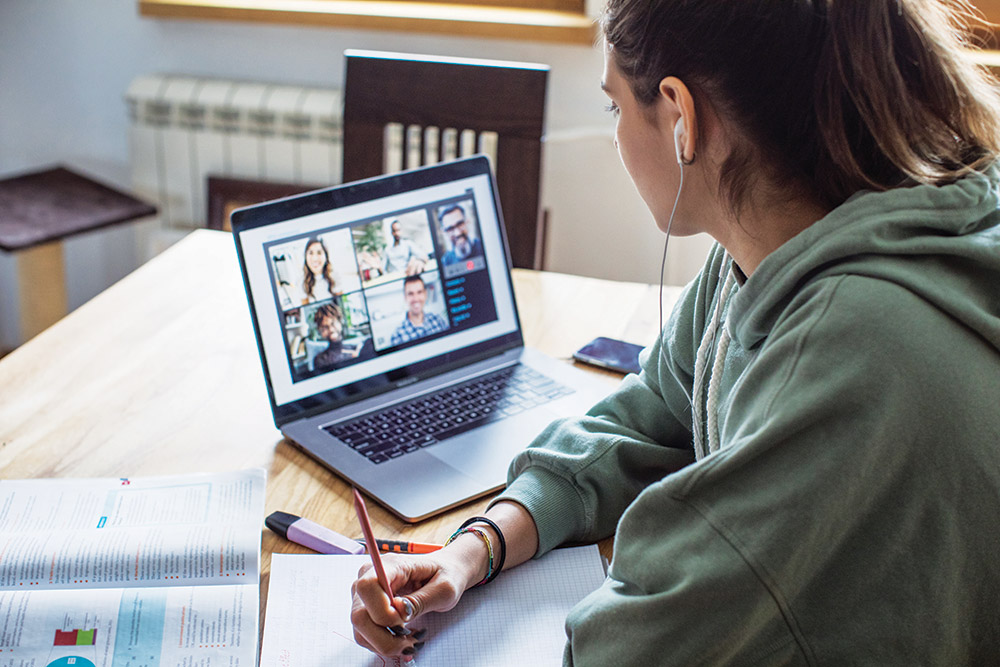
During the COVID-19 pandemic, governments closed schools and universities, and, as a result, educators around the world resorted to online distance learning, or what some people called “emergency remote teaching”. One of the key challenges that teachers faced was how to engage with their students at a distance, using video conferencing platforms like Zoom that lacked the physical proximity of face-to-face interaction. The virtual distance between teachers, students, and their peers initially created feelings of isolation that many struggled with.
In any virtual team there can be issues related to “virtual distance”. These issues can arise from the technology that is being used, which might interfere with normal communication. For example, it can be difficult, or even impossible, to communicate with gesture and gaze over a platform like Zoom. At the same time, the problems can arise from other sources as well. The idea of “virtual distance” therefore includes not only 1) physical distance between team members, and 2) so-called “operational distance” or day-to-day communication challenges, but also 3) “affinity distance”, which is the social and emotional distance that team members can experience.
To better understand how students were experiencing emergency remote teaching, Professor Christoph A HAFNER, Associate Professor of CityU’s Department of English, led a case study that investigated the perceptions of students taking a course in English for science at CityU in the beginning of 2020, a time when social restrictions were especially acute. On that course, students worked in teams to carry out a simple study and create an English video to report their findings.
One of the student teams encountered especially difficult circumstances, as three of the students returned home to Indonesia and carried out their remote learning from that locale. This created a geographical, socio-technical divide. The three Indonesian teammates often discussed their project work privately, excluding their Hong Kong teammate. They met outside of Hong Kong (a geographical barrier to communication), set up an extra WhatsApp group (a technical barrier), and were from the outset all part of a pre-existing friendship group (a social barrier). In this case, the physical, technical, and social dynamic of the team “piled up” to create particularly difficult challenges to effective communication.
These physical, operational, and social factors are also relevant for student teamwork beyond the pandemic. An important implication, now that educators have returned to the classroom, is that for student teams to be successful, teachers need to provide them with opportunities to develop not only good communication practices, but also strong social and emotional bonds.
Publication and achievements
Hafner, CA & Xia, S 2023, “Virtual Distance in Project Work: What We Have Learned From the Pandemic”, RELC Journal. DOI: 10.1177/00336882231158162